

Believing that only experts with fancy degrees can be cybersecurity pros is quite limiting. In fact, several individuals without any computer experience or a computer science background kickstarted their cybersecurity careers.
If you are starting from absolute scratch, it helps to first discover what is cybersecurity to understand the core concepts. What counts is mostly that you are prepared to learn, study, and continue questioning and learning. We are going to explore how to get into cybersecurity in 2026!
The demand for professionals who know how to safeguard data, detect and prevent cyber threats, and ensure system safety is rising. Understanding what a cybersecurity analyst actually does on a daily basis can help you decide whether this career is the right fit. So employers want newbies who will gain practical skills and deal with reality-based problems.
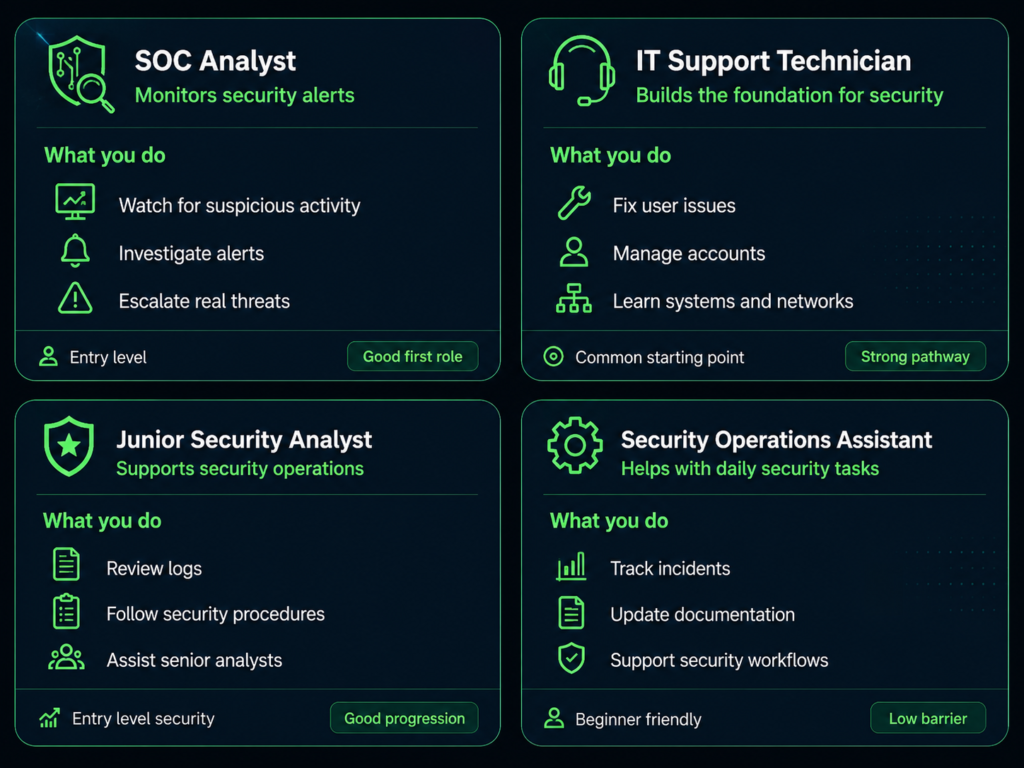
If you are looking to get a job with no prior experience in cybersecurity, there’s excellent advice for you, as it turns out there’s a defined way towards it. You can start to learn the essentials of computer and network operation, receive beginner-level friendly cybersecurity certification, experiment using free online labs, and develop a minor presentation showing what skills you have acquired. Entry-level roles for cybersecurity professionals were often the stepping stones through support desk, helpdesk, IT support, or self-study before getting into the security arena.
Whether you are changing careers, a student, or want to find a better fit for your existing professional skills, our guide will help you take your first step in the world of cybersecurity. Throughout it, you will not only get clear-cut instructions on how to proceed but also insight into the most important qualities a company will look for in a potential candidate for cybersecurity-related jobs and how to land a job even if you have to start from scratch.
Table of Contents
Can You Get Into Cybersecurity Without a Degree?
Yes, you can. You get hired in many cybersecurity roles through a combination of:
- Self study
- Certifications
- Hands-on practice
- Entry-level IT experience
- Strong problem-solving skill
Is It Difficult to Get Into Cybersecurity?
Frequently, a question that is asked goes like, ‘Is it tough to enter the cybersecurity field?’
And the straightforward reply would be:
Demonstrably, it’s challenging, but of course not impossible. You’ll find the most challenging part of the journey to be picking up fundamental concepts and finding ways to practice. But after you get the hang of concepts like computing systems, networks, the internet, etc., you find cybersecurity to be quite approachable.
With dedicated time, most of those at the starting level can be on a path to acquiring some meaningful skills in only 3-6 months. This investment of time is highly rewarding when you look at how much cybersecurity makes across different positions, with entry-level salaries starting well above the tech industry average.
How to Get Into Cybersecurity: Step by Step
Before you become too excited by security tools and want to go headfirst with them, you must get yourself acquainted with what comes next.
1. Learn Basic Computer Skills
- Know the way operating systems work
- Understand the organization of files and folders
- The software installation process
- Basic command-line usage
- The Internet and browsers configuration
You may want to start by studying the Windows operating system, Linux, and the basics of networking. If you prefer structured offline reading to build your foundational knowledge, picking up some of the best books to learn cybersecurity can give you a massive head start.
2. Familiarize yourself with networking
Cybersecurity has its basis in networking. Gaining knowledge in what comes next would be beneficial:
- IP addresses
- Routers and switches
- DNS
- Firewalls
- TCP/IP basics
3. Select a Foundation-Level Certification
Good entry-level certificates include:
| Certification | Best For |
| CompTIA Security+ | General cybersecurity |
| Google Cybersecurity Certificate | Beginners |
| ISC2 Certified in Cybersecurity (CC) | Entry-level roles |
| CompTIA Network+ | Networking basics |
These certificates do more than teach security tools—they show you how to get certified in cybersecurity. Torn between quick certs and years of college? Evaluating if a cybersecurity degree is worth it will help you choose the right fit for your budget and timeline. After all, most employers prioritize demonstrated skills above everything else.
4. Experience through Free Labs
To master skills in any field, hands-on practice is the best way.
The free labs you can use include:
- TryHackMe
- Hack The Box
- OverTheWire
- CyberDefenders
5. Develop a Simple Portfolio
You could either keep it in a file or a GitHub page with stuff like:
- Labs done
- Safety-related projects
- Networking layout charts
- Short stories about your experiences
- Images of your works
How to Get Into Cybersecurity With No Experience?
- Learn networking basics
- Learn Linux fundamentals
- Earn one entry-level certification
- Complete 10 to 20 hands-on labs
- Target specific entry-level cybersecurity jobs or junior IT support roles to gain hands-on experience
- Move into a security-focused position
You can get into cybersecurity within 6-12 months.
How to Get Into Cybersecurity Without a Degree?
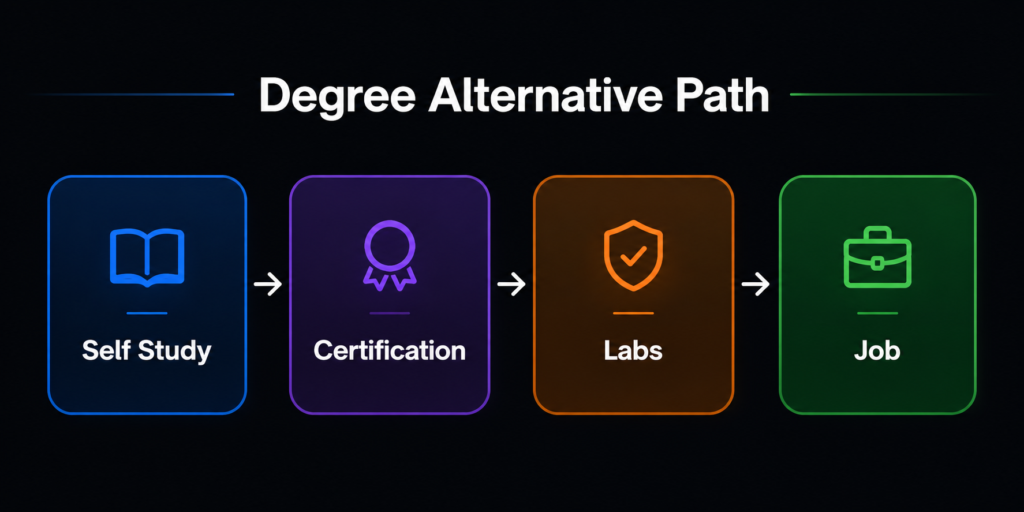
You can get into cybersecurity without a degree by focusing on skills instead of credentials. While attending one of the best colleges for cybersecurity provides a structured, traditional path into the industry, self-taught professionals can find equal success.
Here are the questions employers ask:
- Can you use security tools?
- Can you solve problems?
- Can you learn quickly?
- Can you communicate clearly?
- Can you show real projects?
What Skills Should You Learn First?
| Skill | Why It Matters |
|---|---|
| Networking | Helps you understand traffic |
| Linux | Used in many security environments |
| Windows Administration | Common in businesses |
| Python Basics | Useful for automation |
| Security Fundamentals | Core cybersecurity knowledge |
| Log Analysis | Important for SOC roles |
Beyond technical settings, documentation is a crucial administrative skill. Learning how to write a cybersecurity report is highly valued by employers, as it proves you can translate complex security events into clear, actionable business summaries.
Seeing programming listed alongside core networking often makes beginners panic. However, checking does cybersecurity require coding reveals that you don’t need deep software development skills to land your first role.
Choose Your Cybersecurity Starting Point
Every journey begins differently when one speaks of cybersecurity. To help you decide on one that is the most suitable for your background, study time, and professional objectives, let’s have you answer the questions below.
What Most Accurately Describes a Scenario That Fits Your Career?
- Bachelor/Secondary Student
- Someone Who Decides to Change a Profession
- Non-Graduate
- Experienced IT Staff
How Many Hours Do You Plan on Investing in Learning?
Please select the time you think you can genuinely use for cybersecurity classes during one week.
What Is the Primary Purpose of Your Studies?
- First Cybersecurity Job
- Job Change
- Just to Get Info to Buy Something
- Getting Ready to Sit for Certifications
Suggestions After You Get Answers
Here is where we will direct your cybersecurity quest:
- Start learning network concepts to build the basic skills of a cyber professional.
- Take up an ISC2 Cybersecurity Certification (CC) to prove your ability with cybersecurity basics.
- Do no fewer than 10 first-level labs on TryHackMe to practice cybersecurity and confirm with the theoretical parts that you are learning.
Sticking to this career path, you should learn the core knowledge, acquire practical skills, and gain the confidence required for success in the cybersecurity field.
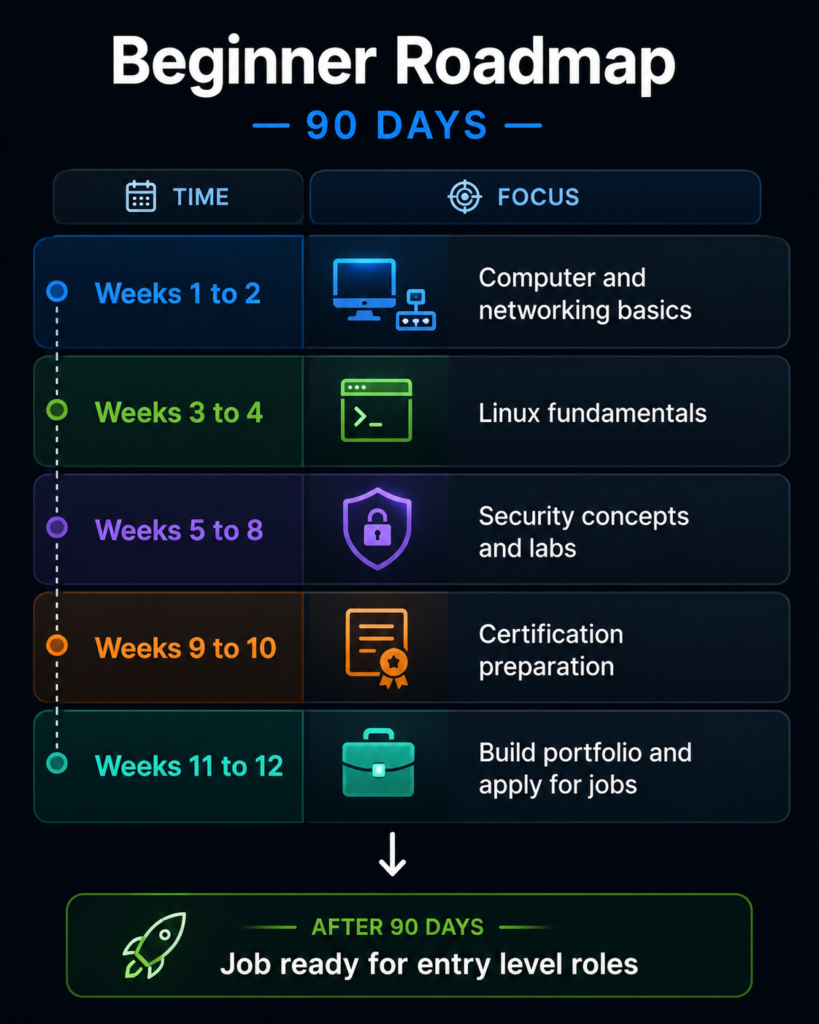
A Simple 90 Day Cybersecurity Plan
How to Transition Into a Cybersecurity Career in the UK?
Employers who transition into a cybersecurity career in the UK often value transferable skills from:
- Customer service
- IT support
- Banking
- Military service
- Project management
- Data analysis
Final Thoughts
Those who would like to know the ways of entering the cybersecurity field remember that the profession is not all about certificates; it highly appreciates skills, eagerness to learn, and perseverance. From this moment, you can start by mastering network fundamentals, experimenting in free labs, getting one beginner’s cert, and making a simple portfolio,
No matter your background, whether you are looking for how to get into cybersecurity with no experience, how to get into cybersecurity without a degree, or how to start a career in cybersecurity, the route is the same: study, practice, develop some work, and consistently submit your applications.
Cybersecurity has a huge demand for new people in the field. Don’t wait; take your first step today!
FAQ’s
Can you enter the field of cybersecurity without a college degree?
Of course you can. Many experts in the field have no college or even high school education and are able to work through their certifications, personal learning, and experience on the job.
Is it possible for me to take up a cybersecurity career without prior work experience?
Of course, yes. You can first take some beginner-level certifications, go through the hands-on labs, and gradually apply for jobs in the security or IT departments at the very entry level.
What is the time required for breaking into cybersecurity?
If you are dedicated to studying and learning, you can be ready for employment after approximately 6 to 12 months.