
Have you ever asked people if their information is secure? You will learn that everyone knows someone who had their personal information hacked or whose password got stolen from an online company. So, the question “Is a Cybersecurity degree worth it?” gets answered. This sort of thing is common nowadays and cannot be called an exception anymore.
This fact is one of the main reasons cybersecurity is one of the most popular specializations right now. It makes sense, but you still need to know whether investing your time and money in such a degree will be worthwhile.
So, let us take a closer look at the question of interest without buzzwords and marketing phrases. We will see is a cybersecurity degree worth it?
Let’s dive in!
What Is a Cybersecurity Degree?
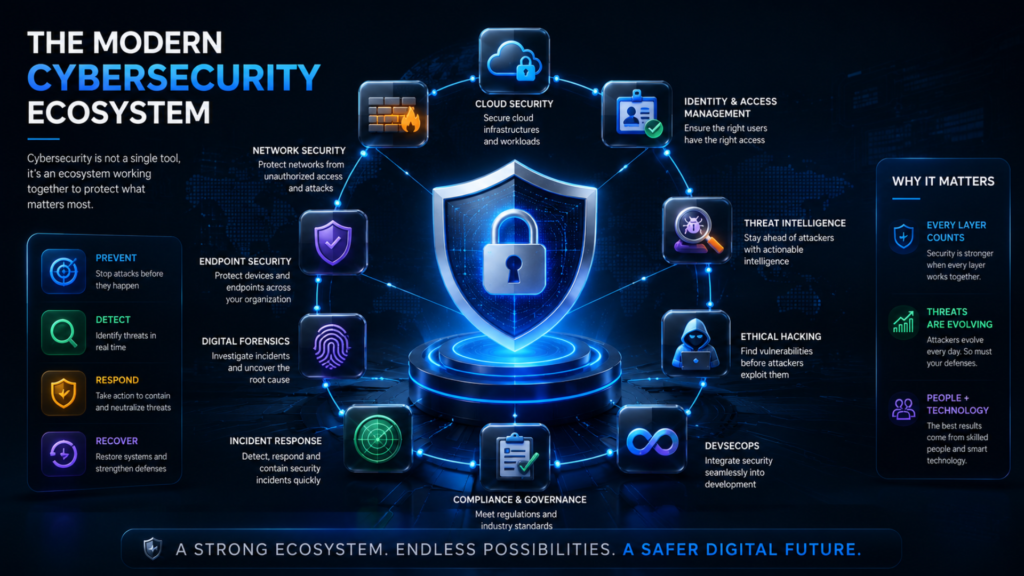
Before knowing “Is a cybersecurity degree worth it?”, we have to know cybersecurity. The study of how digital theft works and how to prevent it is called cybersecurity. In other words, you learn the ways of an aggressor and the ways of preventing these attacks.
Here are some typical courses included in the curriculum of such degrees:
- Network security
- Ethical hacking
- Risk management
- Cloud security
- Digital forensics
- Cyber law and policy
Depending on a university, this degree can be located within the computer science program or exist as an independent educational direction.
Is Cybersecurity a Hard Major?
Honestly? Yes, a little. Nobody breezes through this without putting in the work.
You’ll spend time with logic puzzles, technical systems, and a fair bit of math. But there’s another layer most people don’t expect, and that’s psychology. A huge chunk of cyberattacks work because someone got tricked, not hacked. So you end up studying human behavior almost as much as computer behavior.
What makes it genuinely tough:
• Building real technical skill doesn’t happen overnight
• Threats evolve constantly, so the learning never really stops
• Certain topics demand sharp problem-solving on the spot
Here’s the part that should ease your mind, though. You don’t need to be some kind of coding prodigy to make it through. What actually matters is showing up consistently, staying curious, and getting your hands dirty with practice. Plenty of students who started with zero tech background ended up thriving once they got real lab time under their belt.
How Long Does This Degree Actually Take?
That depends entirely on which path you pick.
• Associate degree: roughly 2 years
• Bachelor’s degree: around 4 years
• Master’s degree: 1 to 2 years, after your bachelor’s
• Certificate programs: anywhere from a few months to a year
A lot of students these days lean toward online study, and it often moves faster. Some people finish a full bachelor’s in three years just by loading up on extra credits each semester.
Are Online Cybersecurity Degrees Worth It?
Generally, yes. The reason is that this may be less surprising than you may think. Employers are much more interested in your capabilities than your learning environment.
There are a number of reasons that online degrees fare quite well in this field:
- Flexibility: While you study, you keep working, allowing you to build practical experience on top of your theoretical knowledge, rather than waiting for it.
- Affordability: You save on housing, daily commuting, and cafeteria plans. In other words, no room and board.
- It is still hands-on: Nowadays, there are enough virtual labs available at online universities to allow students to work with real software.
- Accreditation: An accredited online cybersecurity degree is equal to the traditional one. Just forget about formats.
If you find yourself between the online and traditional education formats, don’t look at the format, but at the university itself.
What Can I Do With a Cybersecurity Degree?
This is where things get exciting, honestly. The range of jobs waiting on the other side is bigger than most people realize. Here is what can you do with a cybersecurity degree:
Security Analyst. This is usually where people land first. Cybersecurity analysts monitor networks, spotting suspicious activity, and jumping in when something looks off.
Penetration Tester. Basically a hired hacker, except it’s completely legal. You break into systems on purpose, so the real criminals can’t find a way in first.
Security Engineer. Part builder, part guard. You design and build the tools and systems that keep networks locked down.
Incident Responder. When an attack is actually happening, you’re the one containing it and getting everything back online.
Security Consultant. You walk into a business, assess their weak spots, and tell them exactly how to fix them. This role tends to pay well because it demands both deep knowledge and strong people skills.
Cybersecurity Manager. Once you’ve put in the years, you can step into leadership, shaping strategy and owning the bigger risk decisions.
Cloud Security Specialist. As more companies shift everything to the cloud, this role has become one of the fastest-growing niches in the field.
So if you’ve been wondering what to actually do with this degree once you have it, the honest answer is: quite a lot.
Is Cybersecurity Worth It as an Actual Career?
Let’s take a step back for a moment and see the big picture. Here you can analyze “Is a cybersecurity degree worth it?”
The demand isn’t dying down anytime soon, because threats continue growing and there are still plenty of companies that need specialists to defend themselves. This automatically makes the situation very favorable.
The pay is usually quite good even at entry level, not to mention that it grows rapidly when you gain experience.
You also have solid job security, since practically every industry requires protection these days, be it a hospital, bank, or local business.
Remote jobs are fairly popular in cybersecurity as well, giving you plenty of opportunities to choose a convenient location to live in.
You’ll also get lots of room for advancement, being able to climb up the ranks all the way from analyst positions to management roles or specialize in a niche.
None of the above guarantees that it’s an ideal career choice, but it doesn’t make the challenges worth ignoring either.
Signs This Degree Might Actually Fit You
The biggest answer to your question “Is a cybersecurity degree worth it?” lies in your interest. Cybersecurity is for you if you:
- like solving puzzles
- are fascinated by how things work
- like paying attention to details
- remain calm under pressure
- are willing to protect people and their information
How to Actually Get Value Out of This Degree
Getting a degree will only get you so far. Beyond the degree, here are some ways to make sure that you can get value out of your degree now, in the next few years, and well into the future.
You should pursue certifications, such as CompTIA Security+ and Certified Ethical Hacker, because having these certifications can help get your resume past hiring managers and make you seem more desirable than the other candidates.
The more you practice in labs, the more hands-on experience you will have, which will be more valuable than textbook knowledge. You should also participate in capture-the-flag challenges and use free labs to hone your skills.
You should set up your own home lab and work on building and defending networks because it shows potential employers that you are knowledgeable and willing to seek out opportunities to improve your skills.
You should network within the cybersecurity community because jobs can come your way through who you know, and not through a job posting. Networking can also help you learn about new trends within the field.
You should pursue internships because they can give you the experience needed to get a job before graduation. Even if you can only get a part-time internship, it is still much better than nothing, and it still looks great on your resume.
Which Industries Are Actually Hiring for This?
This is one of the biggest perks of the field. It’s not locked to one industry.
Healthcare needs airtight security because hospitals hold sensitive patient records and have to follow strict privacy laws.
Finance is a constant target, which means banks and payment companies keep large security teams on staff at all times.
Government agencies handle national security and public data, making them a steady, reliable source of jobs.
Retail and e-commerce businesses process card payments every single day, so they need people watching for fraud around the clock.
Tech companies build the very software everyone uses, which means security has to be baked into the product from day one.
Education institutions store years of student records and research data, and that makes them a growing target too.
The takeaway here is simple. Your degree doesn’t chain you to one employer or one city. It opens doors almost everywhere.
The Green Side of Cybersecurity
This side of Cybersecurity is a big yes to the question “Is a cybersecurity degree worth it?” There is one small detail about this field that people seem to forget. Cybersecurity also encompasses the protection of green technology, or green tech, which includes smart power grids, solar panels, and other alternative energy sources. As the world turns to greener sources of energy, there is a need for people who can protect these life-supporting systems from being hacked. This career path does more than just help companies and organizations; it helps the world.
Is a Cybersecurity Degree Worth It: Final Remarks
Overall, for people who are truly interested in working in this field, it is a definite yes.
One should consider that there is a need for these professionals, they make a good income, and there are many opportunities for people with these skills. Not only that, but it is a growing field that is constantly changing and expanding rather than shrinking.
Whether someone takes the online or traditional route, the most important thing they can do is build their skill set on top of their education. This means getting the proper certifications and experience in order to truly excel in this career field.
The one line answer to “is a cybersecurity degree worth it?” is that it is smart investment for your future! Ready to kick off? Learn how to get into cybersecurity and enhace your career today!
People Also Ask
Is a computer science degree better than a cybersecurity degree?
It depends on your career goals. A computer science degree provides a broader foundation in software development and computing, while a cybersecurity degree focuses on protecting systems, networks, and data. If your long-term goal is information security, digital forensics, or ethical hacking, a dedicated cybersecurity degree may be the better fit.
What skills are more valuable than a cybersecurity degree?
Technical skills such as network security, Linux administration, scripting, cloud security, incident response, and vulnerability assessment are highly valued. Employers also appreciate communication, analytical thinking, problem-solving, and the ability to explain security risks to non-technical stakeholders.
Is cybersecurity still a good career despite advances in AI?
Yes. Artificial intelligence is changing how security teams detect threats and automate routine tasks, but it cannot replace human judgment, investigation, or strategic decision-making. As AI-powered attacks become more sophisticated, skilled cybersecurity professionals are becoming even more important. So, if you are thinking “Is a cybersecurity degree worth it in the era of AI?”, it’s still valuable.
How can students improve their employability while earning a cybersecurity degree?
Start gaining practical experience before graduation. Participate in cybersecurity competitions, contribute to open-source projects, complete internships, build a home lab, earn entry-level certifications, and maintain an active professional profile showcasing your projects and technical skills.
Does a cybersecurity degree guarantee a job after graduation?
No. A degree improves your chances of getting interviews, but employers also look for practical skills, certifications, internships, and hands-on experience. Building a portfolio with labs, Capture the Flag (CTF) challenges, or personal security projects can make you a stronger candidate than relying on a degree alone.