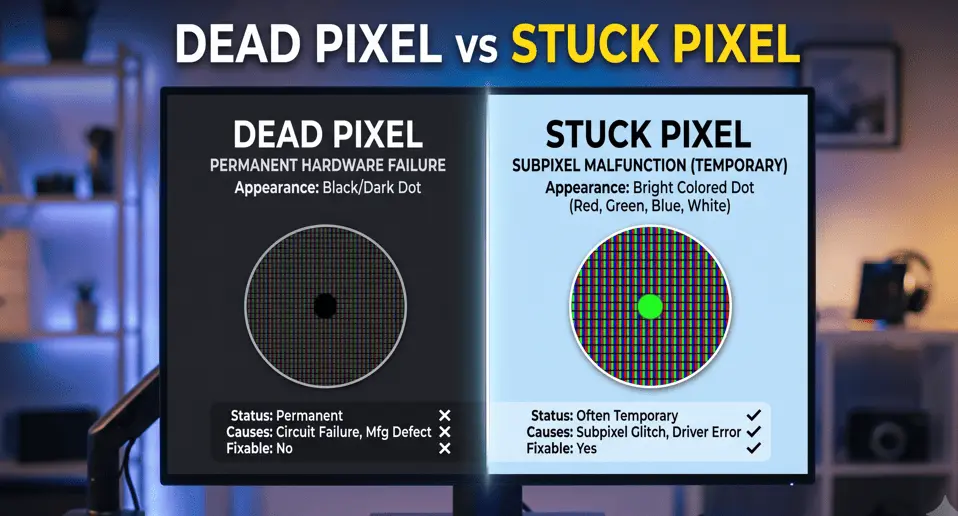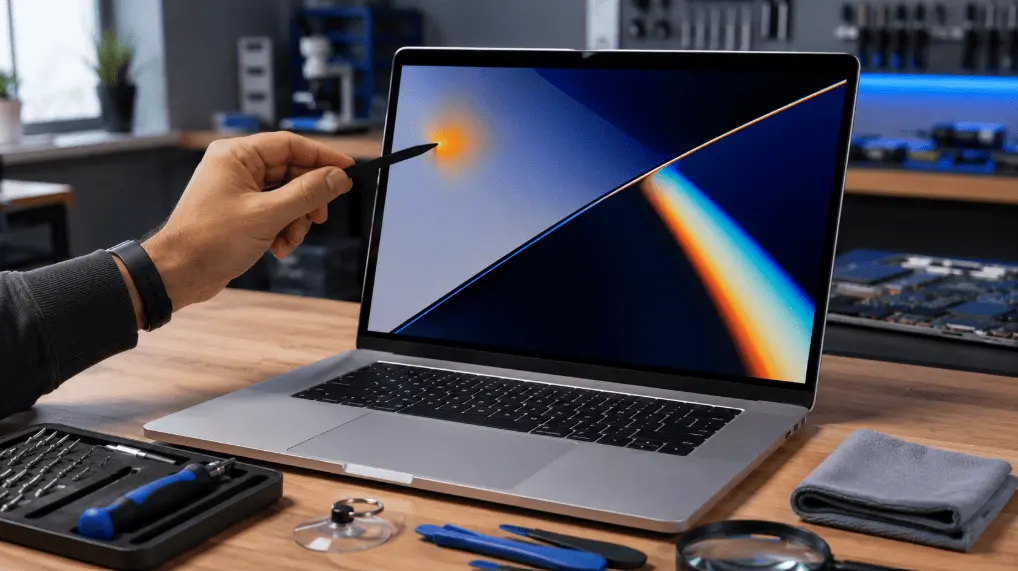
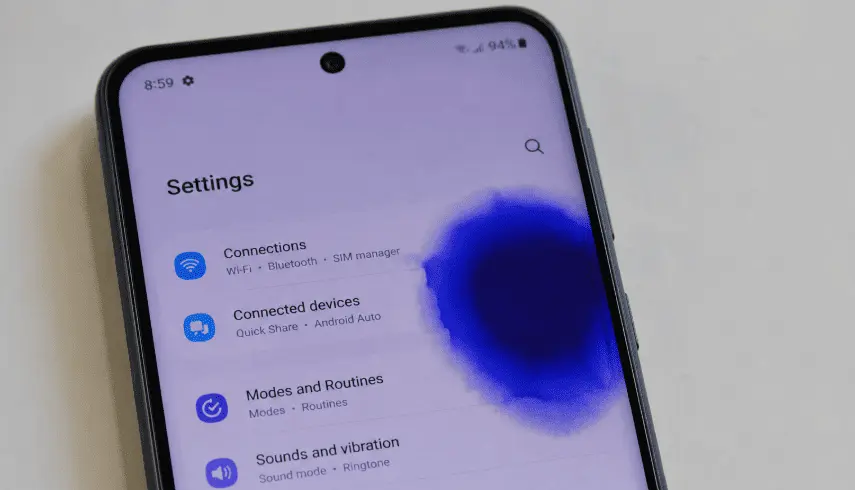
You pick up your phone and suddenly notice a strange blue patch on the mobile screen. At first, it may look like a small blue spot or temporary display glitch. But if the patch stays visible, gets darker, or starts spreading, your screen may have underlying damage.
A blue or purple patch can result from LCD pressure damage, OLED panel failure, liquid exposure, physical impact, or display connection problems. Sometimes, simple software settings can also create unusual colors.
Before you spend money on a screen replacement, it is worth finding the actual cause. In this guide, you will learn how to diagnose a blue patch on mobile screen, try safe fixes, identify signs of hardware damage, and know when professional screen repair is the better option.
Table of Contents
What Does a Blue Patch on Mobile Screen Mean?
A blue patch on mobile screen is a localized area with unusual color. It may look blue, purple, dark, or even ink-like.
Unlike a temporary color change, a physical patch usually stays fixed. It remains visible while you scroll, open apps, or restart the phone.
The exact cause can vary by display type and damage pattern. Common causes include pressure damage, liquid exposure, OLED panel damage, and connector faults.
A software glitch can also create unusual colors. However, it usually affects more than one small area.
Samsung confirms that physical impact can cause abnormal lines and black spots. It also notes that pressure can damage pixels without cracking the glass.
Your keyword research also emphasizes blue patch, blue spot, purple, phone screen, repair, and mobile screen. These terms fit naturally within this section.
What Causes a Blue Patch to Appear on Your Screen?
A blue patch on phone screen isn’t random. Something inside the display got damaged.
The exact cause depends on how the patch looks. A solid blue patch, a small blue spot, or a spreading purple screen can each point to something different.
Below are the five most common causes, ranked from most likely to least likely.
LCD Pressure Damage
This is the number one cause of a blue patch on an LCD screen.
LCD panels use a thin layer of liquid crystal between two sheets of glass. Pressing too hard on the screen can crush that layer.
Sitting on your phone is a common trigger. So is carrying it in a tight pocket with keys or coins.
Once the liquid crystal layer is damaged, it shows up as a blue or purple patch. This kind of pressure damage does not repair itself. Samsung explains that pressure can damage pixels even when the outer glass remains intact.
Internal Liquid Damage
If your phone got wet, this is probably your cause.
Water inside the display leads to corrosion on tiny internal circuits. That corrosion often shows up as a blue patch or blue spot near the edge of the screen.
This includes phones dropped in water, caught in rain, or exposed to steam. Even light water exposure can affect the whole screen over time.
OLED Panel Degradation
OLED and AMOLED screens work differently from LCD screens.
Every pixel on an OLED panel lights up on its own. Over time, individual pixels can age at different rates.
Blue OLED subpixels can age more quickly than their red and green counterparts. This uneven wear can leave a blue tint or blue patch behind on OLED panels.
Screen burn-in from a fixed image, like a navigation bar, can also cause this. It’s more common on older Android screens with years of daily use. You can also learn how to fix dead pixels and troubleshoot related display problems.
Failing Flex Cable or Display Connector
Inside your phone, a thin flex cable connects the screen to the motherboard.
Physical impact, like a drop, can loosen this connector. A loose or damaged cable can trigger Screen flickering, blinking, or a blue patch on display.
This is hardware damage. It usually needs a technician to open the phone and check the connection internally.
GPU or Motherboard Fault
In rare cases, the screen itself isn’t the problem.
A faulty GPU or a motherboard fault can send the wrong signal to the display panel. Voltage irregularities from a failing motherboard can also affect color output.
This can show up as a blue patch, odd colors, or a blinking screen. It’s an uncommon cause, but worth ruling out if other fixes don’t work.
Causes Summary Table
| Cause | How Common | Main Trigger | Can It Get Worse? |
|---|---|---|---|
| LCD pressure damage | Most common | Hard surface pressure, sitting on phone | Yes, often spreads |
| Internal liquid damage | Common | Water exposure, phone got wet | Yes, corrosion spreads |
| OLED panel degradation | Common | Age, screen burn-in | Worsens slowly |
| Flex cable or connector fault | Less common | Drop, physical impact | Can worsen with movement |
| GPU or motherboard fault | Rare | Internal hardware fault | Depends on the fault |
How to Diagnose a Blue Patch on Your Mobile Screen?
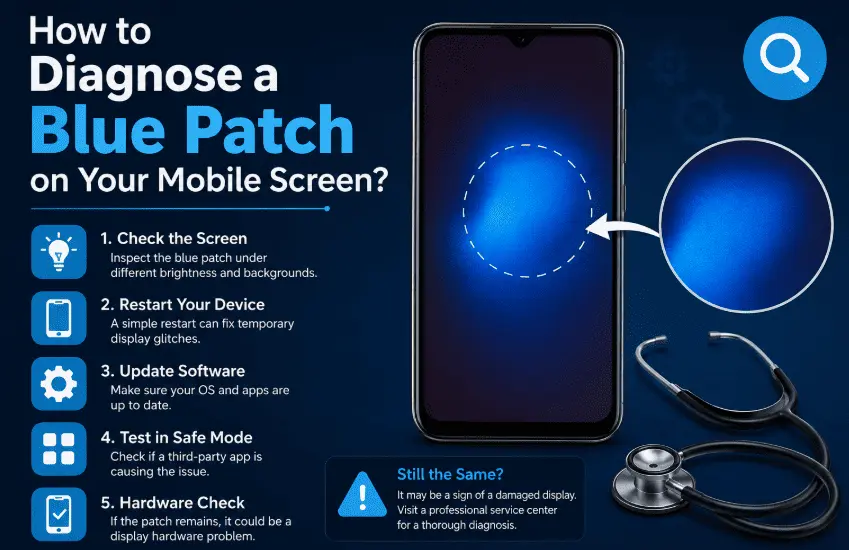
Before trying any fix, take a minute to diagnose the issue properly.
Check these signs first:
- Does the patch stay in one spot, or does it move?
- Did your phone get wet recently?
- Did you drop the phone before the patch appeared?
- Does the screen flicker or blink along with the patch?
- Is the patch spreading day by day?
If the patch appeared after water exposure, treat it as liquid damage first. If it followed a drop, suspect the flex cable or LCD pressure damage.
If nothing physical happened, OLED panel degradation is the likely cause, especially on an older phone.
It also helps to know what this isn’t. If your screen is black instead of colored, that’s usually a separate issue, like a dead display or battery fault.
You can also run a screen test app, or an online screen test tool, to check for stuck pixels or dead pixels and color patches across the display. It’s a quick way to see how far the discoloration reaches before you decide on a fix.
Google recommends checking for software updates when a phone develops display problems such as flickering, tint, or lines. This quick check helps you pick the right fix. It also tells you when it’s time to skip DIY and call a repair shop.
How to Fix a Blue Patch on Your Mobile Screen?
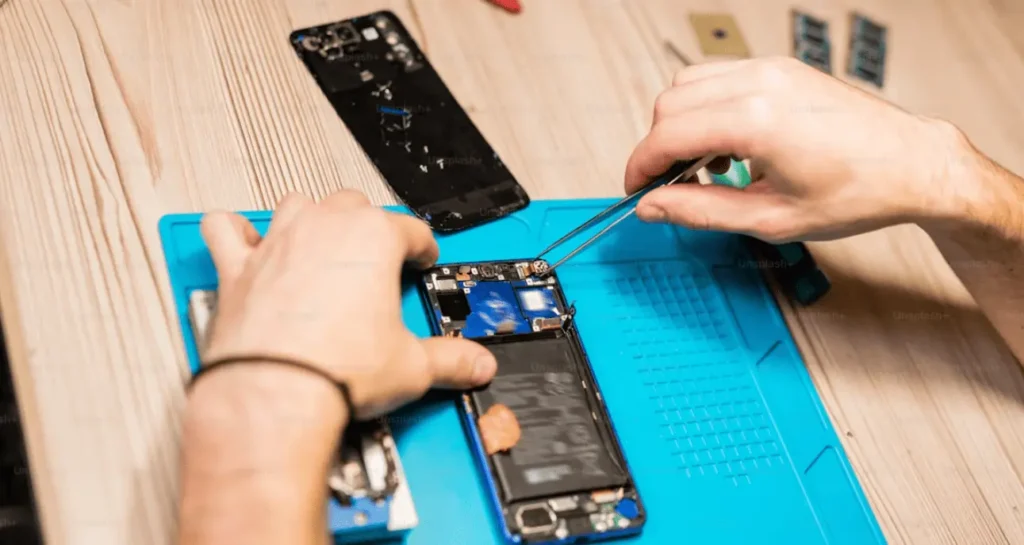
Now let’s go through the actual fixes. Start with Fix 1 and work your way down.
Fix 1: Force Restart the Device
Sometimes a blue patch on mobile screen isn’t hardware damage at all. It’s a software glitch.
Force restart your phone first. On most Android phones, hold the power and volume-down buttons for 10 seconds. On an iPhone, quickly press volume up, then volume down, then hold the side button.
If the blue patch disappears after restart, it was a display driver glitch. This sometimes follows a software update.
If the patch stays after restart, move on to the next fix.
Fix 2: Power Off and Dry for Liquid Exposure
If your phone got wet, act fast.
Power off the phone right away. Do not charge it while it’s wet.
Skip the old advice to put it in rice. Rice doesn’t pull out moisture well, and it can leave dust inside the phone.
Instead, wipe off surface water with a dry cloth. Leave the phone in a dry, ventilated spot for 24 to 48 hours.
After drying, turn it on and check the screen. If the blue patch remains, the water already caused internal damage.
Fix 3: Check Display Settings for Color Overlays
Not every blue tint is physical damage.
Check your display settings for blue light filters or night mode. These features add a blue or amber tint across the entire screen.
Also check any accessibility color-correction settings. A wrong color profile can look exactly like a blue patch or purple screen.
Turn these settings off, then check if the patch is still there. If it disappears, brightness and color settings were the real issue, not your hardware.
Fix 4: Professional Screen Replacement
If the patch survives all three fixes above, it’s physical damage.
At this point, you need to replace the screen. LCD pressure damage and internal liquid damage cannot be fixed through software.
Take your phone to a trusted repair shop for professional repair. For OnePlus, Samsung, and other Android phones, ask for an original display panel. This affects both repair quality and repair cost.
Before you repair the screen, back up your data. There’s a small risk of data loss during any screen repair.
Fix Summary Table
| Fix | Best For | Difficulty | Cost |
|---|---|---|---|
| Force restart | Software glitch | Easy | Free |
| Power off and dry | Liquid damage | Easy | Free |
| Check display settings | Color overlay confusion | Easy | Free |
| Professional screen replacement | Physical or hardware damage | Hard | Paid |
Can A Blue Patch On Mobile Screen Be Fixed With Software?
Sometimes, yes. But only in specific cases.
If an app is the cause, safe mode will confirm it. Reboot into safe mode first. If the patch disappears, an app is triggering it. Uninstall anything you added recently, then reboot normally.
If it’s a bad update, a new software update often solves it. Check your settings for a pending OS update. This has fixed real display glitches on Android before.
But if the cause is physical or pixel-level, software can’t fix it. No app, reset, or OS update repairs a cracked liquid crystal layer. It can’t repair burned-out OLED pixels either. Fixing the screen at that point means a hardware repair.
Can a Blue Patch on a Mobile Screen Spread?
Yes, in most cases, it can.
LCD pressure damage almost always gets worse over time. The patch spreads as the damaged liquid crystal layer breaks down further.
Internal liquid damage spreads too. Corrosion keeps eating away at circuits as long as moisture stays inside.
OLED panel degradation worsens more slowly, but it doesn’t shrink or reverse on its own.
A growing patch can also reduce screen visibility, making text harder to read in bright light. If you notice it spreading, don’t wait it out.
Will the Blue Patch Fix Itself?
No. A blue patch will not fix itself.
This isn’t a temporary screen glitch that clears up after a restart. If it’s caused by physical damage, it’s permanent without repair.
Software-related color issues, like display setting overlays, are the exception. Those go away once you turn off the setting.
But true hardware damage, like a blue spot from pressure or water, stays until you replace the screen.
How Much Does It Cost To Fix A Blue Patch On A Phone?
Cost depends heavily on your brand, model, and panel type. Here’s what current 2026 pricing looks like.
iPhone. Apple’s official out-of-warranty screen prices start around $129 for older models. They climb to $379 for the iPhone 16 Pro Max. AppleCare+ drops that to a flat $29 per incident. Independent shops usually charge $190 to $280 instead.
Samsung. Official Galaxy S26 series pricing runs about $259 to $300 or more. That’s roughly $20 to $35 higher than the S25 lineup. A Samsung Galaxy A54 screen replacement is much cheaper. Independent shops often charge $100 to $180. Samsung Care+ can bring a single incident down to about $29 too.
OnePlus. Official US screen repair usually runs $120 to $280, depending on the model. A OnePlus 12 replacement lands around $200. OnePlus also runs a Lifetime Display Warranty, launched in 2024. It covers a specific “green line” defect on select AMOLED models. It’s mainly rolled out in India so far. It does not cover pressure-induced patches, cracks, or general discoloration. Don’t count on it for this particular problem.
Across every brand, a genuine OEM screen costs more than a generic one. Generic parts can shift colors or feel less responsive. Ask your repair shop which type they’re quoting before you agree.
A trained technician can also tell you if the repair is worth it. On an older phone, replacing the entire display may cost close to a used replacement phone. On a newer phone, it’s usually worth repairing. Prices shift often. Treat these numbers as a starting point, and confirm with an official estimator before you commit.
Is Screen Repair a Smart Choice for an Older Phone?
This depends on your phone’s age and value.
If your phone is under two years old, repair is usually worth it. A new screen can cost far less than a new phone.
If your phone is older, do the math first. Compare the repair cost against the price of a similar used or new phone.
For flagship phones, like a Samsung Galaxy A54, repair worth is usually still high. For budget smartphones near the end of their life, a new phone can be the smarter call.
Common Mistakes to Avoid
Avoid these mistakes when dealing with a blue patch:
- Don’t press or rub the patch, hoping it disappears.
- Don’t put a wet phone in rice as your only fix.
- Don’t ignore a spreading patch and keep using it normally.
- Don’t skip a backup before you repair the screen.
- Don’t pick the cheapest, unverified repair shop for hardware damage.
- Don’t assume every blue tint is hardware damage before checking display settings.
Prevention Tips
You can lower your risk of future screen issues.
Use a case with raised edges. It protects the display panel from hard surface impact.
Avoid sitting on your phone or storing it under heavy objects. This is the top cause of LCD pressure damage.
Keep your phone away from water exposure. Avoid using it in the shower or near open water.
Update your operating system when prompted, but check the OS notes first. Rarely, a software update can affect display drivers.
Turn off unused blue light filters when you don’t need them. It reduces confusion if a real screen issue appears later.
Frequently Asked Questions
Can a blue patch on a phone screen be fixed without replacement?
Sometimes, yes. If it’s caused by a software glitch or a display setting, a restart or a settings change can fix it. If it’s caused by physical or liquid damage, screen replacement is usually the only fix.
Why did a blue patch appear on my screen overnight?
This often means pressure damage that built up slowly. It can also follow water exposure you didn’t notice right away. In rare cases, a software update triggers a display glitch overnight.
Is a blue patch covered under Apple or Samsung warranty?
It depends on the cause. Manufacturing defects are usually covered. Damage from drops, pressure, or water exposure is typically not covered under a standard warranty. Follow the manufacturer’s Apples liquid-damage guidance for complete information
Can a software update cause a blue patch on the screen?
Yes, though it’s uncommon. A buggy update can affect the display driver. This usually clears up after a restart or the next update.
How fast does LCD pressure damage spread?
It varies by phone and by how severe the damage is. Some patches stay small for weeks. Others spread across the entire screen within days.
Can my phone overheat and cause a blue patch?
Overheating alone rarely causes a blue patch directly. But it can stress the flex cable or display connector. Over time, that stress can lead to display issues, including color patches.
Expert Verdict
A blue patch on your phone screen is almost never random.
It usually means LCD pressure damage, liquid damage, or OLED wear. Occasionally, it’s just a software glitch or a display setting.
Start with the easy fixes: restart, dry it out, check your settings. If the patch stays, professional screen replacement is the reliable next step.
Whatever you do, don’t ignore a spreading patch. Acting early protects your phone, your data, and your repair budget.