In today’s digital landscape, cyber threats such as ransomware and data breaches pose a significant risk to businesses, threatening them with costly attacks. Mastering GRC cybersecurity enables your organization to mitigate these risks, maintain business continuity, and avoid regulatory penalties. By adopting a strong GRC strategy, you directly protect your operations, reputation, and sensitive data.
Table of Contents
What is GRC in Cybersecurity?
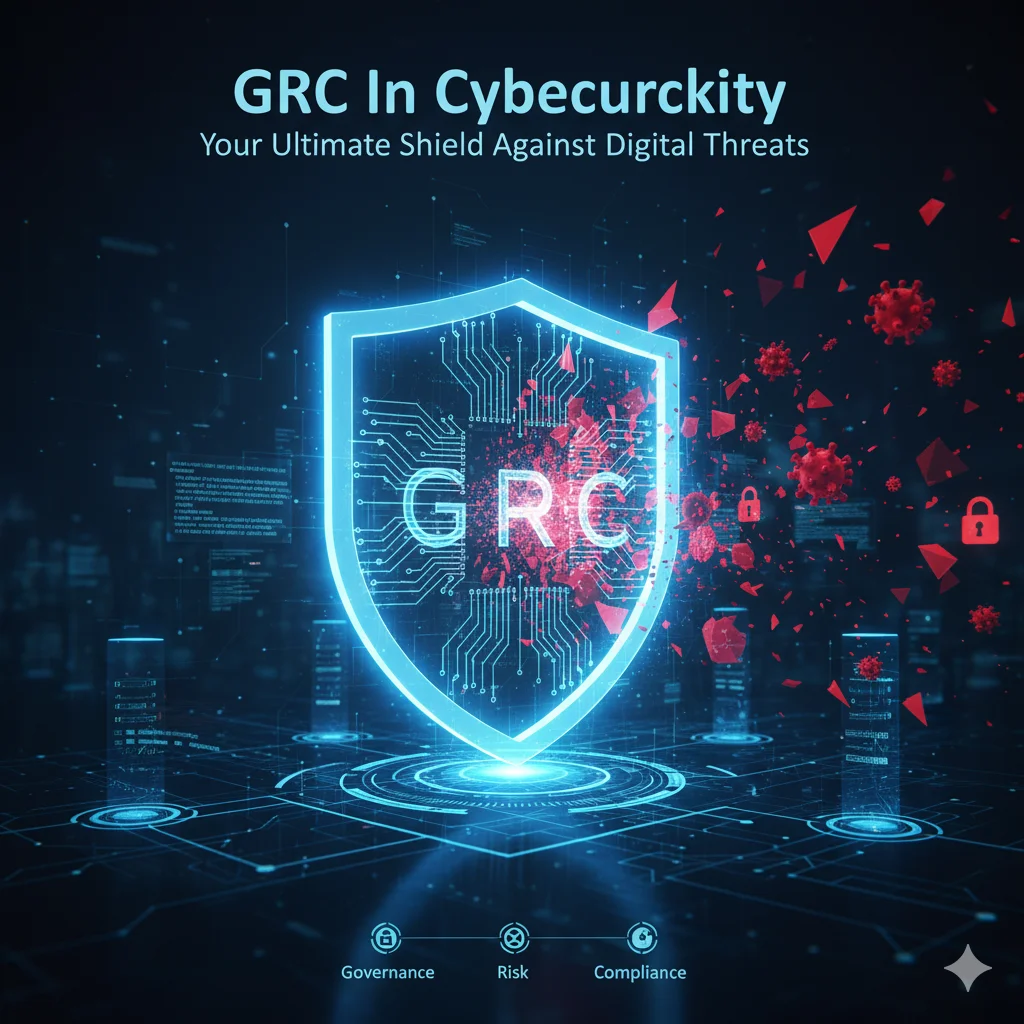
GRC in cybersecurity stands for Governance, Risk, and Compliance, a strategic framework organizations use to protect digital assets. This integrated approach aligns policies, processes, and technologies to safeguard data integrity, confidentiality, and availability. A robust GRC framework enables the achievement of regulatory compliance, addresses vulnerabilities, and enhances overall resilience in a digital landscape.
Definition
In cybersecurity, GRC (Governance, Risk, and Compliance) helps organizations mitigate cyber threats, meet legal and industry requirements, and build a culture of accountability and improvement. It enables teams to better safeguard their assets and achieve compliance objectives.
Governance
Cybersecurity governance establishes policies, procedures, and frameworks to guide secure operations and ensure compliance. It includes defining roles, setting objectives, and implementing oversight to protect assets.
If you’re building a GRC career path, check does cybersecurity require coding to see why non-technical governance roles are ideal for professionals without a computer science background.
Risk Management
Risk management systematically identifies and mitigates cyber risks that could impact operations or data. Tools like risk assessments, threat modeling, and vulnerability scanning help prioritize threats and develop strategies to build resilience against attacks.
Compliance
Compliance ensures organizations follow regulations and standards, such as GDPR, HIPAA, or PCI-DSS. This involves audits, reporting, and training to meet requirements, avoid penalties, and build trust by aligning with cybersecurity standards.
Why GRC is Your Ultimate Shield Against Digital Threats
A robust GRC framework enables organizations to effectively manage risks and secure their digital assets. By integrating threat management, mitigation, and compliance, GRC helps businesses stay ahead of attacks while maintaining regulatory adherence. This approach strengthens defenses, reduces costs, and enhances trust, making GRC a vital component for cybersecurity resilience.
Benefits of GRC
- Proactive Threat Identification and Mitigation: GRC empowers organizations to pinpoint vulnerabilities early and deploy precise mitigation strategies, ensuring threats are neutralized before they escalate.
- Streamlined Compliance with Regulations: GRC reduces penalties and reputational risk by ensuring data protection compliance through regular audits and strict adherence to standards such as GDPR, HIPAA, and PCI-DSS.
- Enhanced Organizational Resilience: A GRC framework builds a security-first culture and enables swift recovery from incidents, ensuring continuous operations and robust cybersecurity resilience.
Real-World Examples
- Cost of Data Breaches: According to IBM’s 2025 Cost of a Data Breach Report, the average cost of a data breach reached $4.88 million, underscoring the need for robust GRC frameworks to minimize financial losses through proactive cyber threat management.
- Successful GRC Implementations: A global financial institution reduced its breach risk by 40% after adopting a GRC framework, leveraging cybersecurity audits and risk mitigation strategies to align with PCI-DSS standards, showcasing the power of GRC in real-world applications.
Key Components of a Strong GRC Cybersecurity Strategy
A robust GRC cybersecurity strategy fosters resilience against threats by leveraging risk assessment, policy development, compliance management, and effective technology integration. Leveraging a robust framework, organizations can identify vulnerabilities, align with compliance standards, and automate processes, thereby enhancing efficiency and improving online visibility through optimized practices.
Risk Assessment
Risk assessment identifies vulnerabilities and threats in an organization’s digital environment. Tools like scanners, threat modeling, and penetration testing, combined with NIST frameworks, help prioritize and mitigate risks within GRC.
Policy Development
Cybersecurity policies aligned with business goals ensure a cohesive security posture. Developed collaboratively, these protocols address data protection, access control, and incident response, reinforcing governance and accountability.
Compliance Management
Compliance management ensures adherence to legal and industry standards. Regular audits, training, and monitoring help organizations avoid penalties and build trust by meeting requirements.
Technology Integration
Integrating GRC software streamlines cybersecurity processes. These technologies enable real-time monitoring, threat detection, and reporting for efficient and robust protection against threats.
Steps to Master GRC in Cybersecurity
Mastering GRC in cybersecurity enables organizations to build a strong defense by utilizing robust frameworks, combining risk assessments, tailored policies, and tools for compliance and proactive management. Following these steps enhances visibility and optimizes governance to align with established standards and manage risks effectively.
Practical Guide
- Conduct a comprehensive cyber risk assessment to identify vulnerabilities using scanners and NIST-based assessments, prioritizing risks and informing the GRC framework for sound governance.
- Develop and Implement a Tailored GRC Framework: Create policies and procedures that align with business goals, incorporating strategies and compliance requirements for specific needs.
- Train Employees on Cybersecurity and Compliance: Foster a security-first culture through regular training, ensuring employees understand policies, protocols, and standards such as GDPR or PCI-DSS.
- Leverage GRC Software: Use software for real-time monitoring, compliance tracking, and reporting to streamline processes and enhance cyber threat management visibility.
- Regularly Audit and Update Your GRC Strategy: Periodically assess the effectiveness of your GRC strategy and update policies and controls to address emerging threats and maintain compliance.
Top GRC Tools and Technologies for Cybersecurity
In the rapidly evolving world of cybersecurity, selecting the right GRC tools and technologies is crucial for organizations seeking to automate risk management, ensure seamless compliance, and strengthen defenses against sophisticated threats.
As cyber risks escalate—with global breach costs projected to exceed $10 trillion annually by 2025- these platforms integrate governance, risk assessment, and compliance monitoring into unified systems, leveraging AI and automation to deliver real-time insights.
Leading GRC software for cybersecurity, such as ServiceNow and RSA Archer, empowers teams to shift from reactive fixes to proactive cyber threat mitigation, aligning with frameworks like NIST and ISO 27001 for enhanced resilience.
Overview: Leading GRC Platforms in 2025
The GRC market is booming, with the adoption of integrated platforms surging due to demands for AI-driven risk analytics and continuous compliance tracking. According to recent industry analyses, top GRC tools for cybersecurity now prioritize scalability for both enterprises and SMBs, with features tailored for cyber risk management and regulatory adherence. Here are five standout solutions dominating 2025 rankings:
- ServiceNow GRC: A powerhouse for workflow automation, embedding risk management and incident response into IT operations for a 360-degree view of compliance posture.
- RSA Archer: Renowned for its modular design, offering advanced analytics and customizable assessments ideal for third-party risk in regulated sectors like finance.
- LogicGate Risk Cloud: A no-code platform that excels in flexible risk modeling and automated evidence collection, perfect for tailoring GRC strategies to unique business needs.
- MetricStream: An AI-enhanced suite for holistic governance, featuring predictive insights and ESG integration to streamline cyber audits and policy enforcement.
- AuditBoard: User-friendly for collaborative risk oversight, with pre-built templates accelerating SOX, GDPR, and HIPAA compliance workflows.
These top GRC software options, vetted by Gartner and Forrester, are widely adopted by cybersecurity teams for their ability to unify siloed data and reduce manual efforts by up to 50%.
Key Features to Prioritize: Automation, Real-Time Reporting, and AI Risk Analytics
When evaluating GRC tools for cybersecurity, focus on capabilities that address modern challenges, such as zero-trust architectures and evolving regulations. Essential features include:
- Automation for Compliance and Workflows: Look for no-code/low-code builders in platforms like LogicGate, which automate policy mapping and control testing, cutting deployment time by 40% and minimizing human error in cyber risk assessments.
- Real-Time Reporting and Dashboards: ServiceNow and AuditBoard excel in this area, offering customizable visualizations and alerts that are integrated with SIEM tools for instant threat visibility and audit-ready reports.
- AI-Powered Risk Analytics: MetricStream’s AI-SPHERE and RSA Archer’s predictive modeling use machine learning to score vulnerabilities, simulate attack scenarios, and forecast compliance gaps—vital for proactive cyber defense in 2025.
These elements ensure your GRC platform supports semantic search for threats and integrates with tools like Splunk for comprehensive cyber risk management.
Benefits: Boosting Efficiency, Compliance, and Cybersecurity Resilience
Implementing top-tier GRC technologies yields measurable ROI, transforming cybersecurity from a cost center to a strategic asset. Key advantages include:
- Streamlined Operations and Cost Savings: Automation in these tools slashes audit preparation by 50%, freeing teams for high-value tasks like threat hunting and reducing overall GRC overhead.
- Enhanced Compliance and Risk Mitigation: Built-in regulatory libraries for GDPR, PCI-DSS, and NIST ensure audit success, with real-time monitoring cutting penalty risks by up to 30% through automated evidence gathering.
- Proactive Threat Defense: AI analytics in platforms like IBM OpenPages (a strong contender for data-heavy environments) correlate risks across silos, accelerating remediation and building a resilient posture against ransomware and supply chain attacks.
By adopting these GRC solutions, organizations not only meet compliance standards but also drive business growth— with 70% of leaders reporting improved decision-making from integrated platforms. For tailored recommendations, assess your needs against demos from these vendors to unlock the full potential of cybersecurity GRC in 2025.
Challenges in Implementing GRC Cybersecurity
In 2025, as cybersecurity threats surge—with 48% of organizations prioritizing cyber risks in their Governance, Risk, and Compliance (GRC) agendas—implementing effective GRC frameworks remains a top priority for resilience. Yet, GRC implementation challenges in cybersecurity, ranging from siloed data to regulatory flux, hinder 40% of teams that lack centralized systems, resulting in fragmented defenses and compliance gaps. This section uncovers key hurdles and proven solutions to help you navigate GRC cybersecurity challenges, aligning with NIST and ISO 27001 for proactive threat management.
Common GRC Implementation Challenges in Cybersecurity for 2025
Organizations grapple with these persistent obstacles:
- Lack of Executive Buy-In and Awareness: Without C-suite alignment, GRC is often seen as a “checkbox,” stalling initiatives. Up to 60% of programs fail here, as business priorities eclipse cyber risk reduction. Keywords: executive buy-in in GRC cybersecurity, awareness challenges.
- Integration with Legacy Systems: Merging GRC platforms with SIEMs and IAM tools can create silos, especially in outdated environments lacking APIs, which delays visibility into third-party risks affecting 70% of firms. Keywords: GRC integration challenges, legacy security risks.
- Data Inconsistency and Poor Risk Visibility: Fragmented data sources undermine assessments, with 60% struggling to meet compliance amid AI-driven threats. Keywords: risk visibility in GRC, data management hurdles.
- Regulatory Complexity and Resource Constraints: Evolving regulations like GDPR and DORA, combined with AI governance, overwhelm teams, exacerbated by a 3.5 million global talent shortage and budget limits. Keywords: regulatory challenges in GRC 2025, cybersecurity resource gaps.
- Manual Processes and Cultural Resistance: Overreliance on spreadsheets invites errors, while employee pushback disrupts adoption in a security-first culture shift. Keywords: GRC automation needs, change management in cybersecurity.
Strategies to Overcome GRC Cybersecurity Challenges
Turn pitfalls into strengths with these targeted approaches:
- Secure Buy-In via ROI-Focused Pilots: Utilize dashboards to highlight 30% breach cost savings and engage leaders early.
- Leverage AI-Powered Platforms: Tools like ServiceNow automate integration and monitoring, cutting manual efforts by 50%.
- Invest in Training and Data Governance: Build skills and centralize data for real-time compliance, addressing 47% of AI-related concerns.
- Adopt Continuous Audits: Track KPIs, such as response times, to measure effectiveness and adapt to regulations dynamically.
By tackling these GRC implementation challenges in cybersecurity, you’ll fortify your framework for 2025’s threats. Audit your setup today—link to [Top GRC Tools] for scalable solutions. What’s your top hurdle? Share below!
The Future of GRC in Cybersecurity
The future of Governance, Risk, and Compliance (GRC) in cybersecurity is moving toward intelligent automation, real-time monitoring, and predictive analytics. As cyber threats evolve and regulations tighten, GRC is becoming a strategic, proactive system — not just a compliance necessity. Organizations that adopt next-generation GRC solutions will achieve stronger cyber resilience, enhanced risk visibility, and ongoing compliance.
AI and Machine Learning in GRC
Artificial Intelligence (AI) and Machine Learning (ML) are reshaping how GRC frameworks operate. These technologies help detect anomalies, analyze security data, and predict risks before they escalate. AI-powered GRC platforms will enable organizations to make faster, data-driven decisions and maintain real-time visibility into compliance.
Automation and Continuous Compliance
The future of GRC lies in automation and continuous compliance. Instead of relying on manual checklists or periodic audits, automated GRC tools will track compliance 24/7. This shift enables organizations to maintain constant readiness, reduce errors, and simplify compliance with multiple frameworks, including ISO 27001, SOC 2, NIST, and GDPR.
Integration with Cybersecurity Ecosystems
Next-generation GRC systems will integrate seamlessly with SIEM, IAM, and vulnerability management tools to create a unified security environment. This integration helps align governance data with real-time threat detection, improving both incident response and risk management.
Predictive Risk Intelligence
Future GRC platforms will move from reactive risk reporting to predictive intelligence. By utilizing real-time analytics, these systems can forecast potential vulnerabilities or compliance gaps before they occur. This proactive approach enhances organizational resilience and reduces the likelihood of cyber incidents.
Blockchain for Compliance and Data Integrity
Blockchain technology will revolutionize how organizations manage audit trails and verify compliance. With immutable ledgers and smart contracts, blockchain ensures data transparency, tamper-proof logs, and secure audit evidence, making regulatory reporting more trustworthy and efficient.
Cloud-Native and Scalable GRC Platforms
The future of GRC is cloud-based and scalable. Cloud-native platforms will allow global organizations to manage compliance and risk from anywhere, with real-time dashboards and multi-cloud integration. This model supports agility, reduces infrastructure costs, and aligns perfectly with digital transformation initiatives.
Cyber Resilience as a Core Focus
Tomorrow’s GRC strategies will focus more on cyber resilience than basic compliance. This means building systems that can anticipate, withstand, and recover from cyberattacks or operational disruptions quickly and efficiently. GRC will play a crucial role in ensuring business continuity and mitigating strategic risks.
Ethical AI and Human-Centric Governance
As automation and AI dominate cybersecurity GRC, ethical governance will become crucial. Organizations must ensure transparent decision-making, human oversight, and responsible data handling. The goal will be to strike a balance between technological innovation and ethical accountability and trust.
Summary
Effective GRC in cybersecurity integrates governance, risk management, and compliance to protect organizations from escalating cyber threats while ensuring regulatory adherence. By mastering GRC through strategic planning, utilizing top-tier tools like ServiceNow and RSA Archer, and embracing forward-looking trends such as AI automation and zero-trust architectures, businesses can reduce breach risks by up to 40% and streamline compliance efforts, according to recent industry insights. Overcoming challenges such as executive buy-in and regulatory complexity ensures a resilient cybersecurity posture that aligns with business objectives.
Organizations should assess their current GRC strategies to identify gaps and explore modern GRC platforms, such as LogicGate or MetricStream, for scalable solutions. Investing in automation and continuous training will future-proof cybersecurity efforts, ensuring agility in dynamic threat environments. Start today by auditing your GRC framework or consulting with a cybersecurity expert to enhance your defenses.
What challenges have you faced in implementing GRC in your organization? Share your experiences or questions in the comments below, or reach out to discuss how tailored GRC tools can elevate your cybersecurity strategy. Let’s build a secure digital future together!