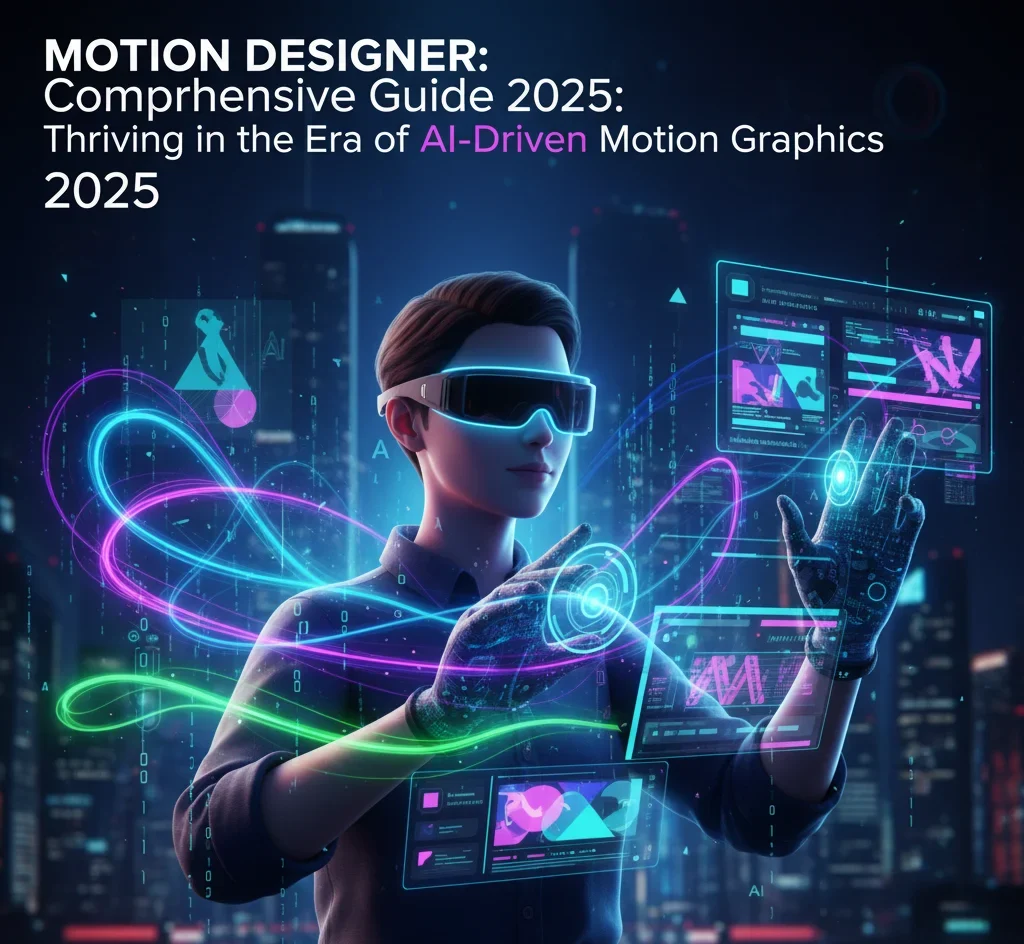
If you’ve ever been mesmerized by an animated logo, a slick title sequence, or the way an app transitions between screens, you’ve experienced the magic of motion design. Far beyond simple graphic design, this discipline brings visual elements to life, transforming static concepts into engaging, dynamic narratives.
In 2026, the demand for skilled Motion Designers is skyrocketing, driven by the explosion of digital content, social media, and immersive technologies like AR/VR. This is a creative career that sits right at the intersection of art and technology. This comprehensive guide, written by industry experts, will walk you through everything you need to know, from essential skills to career prospects and how to adapt to the groundbreaking influence of AI tools for design.
Table of Contents
What Exactly is Motion Design? (And How is it Different from Animation?)
At its core, motion design is a form of graphic design that brings graphics to life through motion.
A traditional graphic designer arranges text, images, and shapes on a page or screen, while a Motion Designer focuses on their timing, movement, and transitions.
| Feature | Motion Design | Traditional Animation |
| Primary Goal | Communicating information, branding, or feeling. Often focused on abstract shapes and kinetic typography. | Telling a story through characters, plot, and environment. Focused on character performance. |
| Foundation | Graphic Design Principles (Layout, Color, Typography). | Animation Principles (Squash & Stretch, Timing, Anticipation). |
| Output Examples | Title sequences, explainer videos, animated logos, UI/UX animation, data visualization. | Cartoons, feature films, character-driven shorts. |
Motion designers excel at visual storytelling, using movement to simplify complex ideas, reinforce brand identity, and elevate the user experience across all digital platforms.
Why Choose a Career as a Motion Designer in 2026?
We’re living in a video-first world. From TikTok to streaming platforms, moving visuals are the universal language. This sustained growth makes a career in motion design not just creatively rewarding but financially secure.
Solid Job Prospects and Industry Growth
The job outlook for Motion Graphics Designers remains highly positive. According to recent data from the Bureau of Labor Statistics and industry projections, the employment of animators and digital artists is expected to grow faster than the average for all occupations well into the next decade.
The demand is fueled by the perpetual need for:
- Branding & Advertising: Creating engaging commercials and digital banner ads.
- User Interface (UI): Designing intuitive UI/UX animation for apps and websites.
- Corporate & Education: Producing explainer videos and training materials.
- Entertainment: Developing TV show intros and film title sequences.
Motion Designer Salary Expectations (2026 Projections)
Salary varies by experience, specialization (e.g., 3D animation), and location, reflecting strong demand for skilled professionals.
| Experience Level | National Average Salary (Projected 2026) |
| Entry-Level (1-3 years) | $65,000 – $75,000+ |
| Mid-Level (4-7 years) | $85,000 – $107,000+ |
| Senior/Lead (8+ years) | $115,000 – $160,000+ |
High-Demand City Benchmarks (Median Salary Projections):
- New York City (NYC): Often $90,000 – $110,000+ (Reflecting the higher cost of living and media hub status)
- Los Angeles (LA): $95,000 – $115,000+
- San Francisco / Bay Area: $100,000 – $130,000+
The Essential Skills for a Motion Designer in the AI Age
To succeed as a Motion Designer in 2026, combine strong technical skills with refined artistic sensibility.
Core Technical Proficiency (The Tools of the Trade)
- Adobe After Effects (The Industry Standard): Mastery of this software is non-negotiable for creating motion graphics, animation, and visual effects (VFX).
- Graphic Design Software: High proficiency in Adobe Illustrator and Photoshop for creating and preparing assets.
- Video Editing: Solid understanding of programs like Adobe Premiere Pro is essential, as motion work is often integrated into larger video editing projects.
- 3D Skills (The Competitive Edge): Experience with 3D software, such as Cinema 4D, Blender, or Maya, sets you apart for high-end projects.
Foundational Art and Design Skills
- Animation Principles: Understanding the 12 Principles of Animation (timing, anticipation, follow-through) is what makes your work look professional, not robotic.
- Typography: Expertise in composition, visual hierarchy, and creating compelling kinetic typography.
- Color Theory: Ability to use color to evoke emotion and maintain brand consistency.
- Storyboarding and Concepting: The capacity to visualize and plan a project from idea to finished product.
The 2026 Skill Imperative: AI Integration
The most crucial skill today is the ability to leverage AI tools for design. AI is not replacing the designer; it is replacing tedious tasks. Successful designers are learning to use tools like:
- RunwayML: Generates video assets and automates editing tasks.
- Midjourney and Dall-E: Instantly create concept art or backgrounds in different styles for storyboarding and exploration.
- AI-Driven Compositing: Tools integrated into After Effects that automate rotoscoping, object tracking, and upscaling, dramatically accelerating workflows.
- Prompt Engineering: The skill of directing AI with specific, effective text prompts to generate complex visual ideas quickly.
Mastering Motion Design: Where to Get Your Expertise
Becoming a credible and authoritative Motion Designer requires focused learning and dedicated practice. Your professional journey should be about building a robust portfolio and gaining real-world Experience.
Paths to Expertise
- University/College Programs: A traditional degree in graphic design, animation, or film provides a structured foundation in design theory, color, and art history.
- Online Courses & Bootcamps: Platforms like School of Motion, Skillshare, and Udemy offer project-based learning focused on modern workflows and software skills (Adobe After Effects, Cinema 4D). These are excellent for upskilling and gaining technical Expertise.
- Mentorship and Networking: Seek out a mentor (Freelance Motion Designer or studio professional) via LinkedIn or industry events. Feedback from a veteran is invaluable for developing your unique voice.
- The Portfolio: Your portfolio is the ultimate proof of your authority. It should showcase a diverse range of projects, from UI/UX animation to 3D animation title cards, clearly demonstrating your process and the results achieved.
Frequently Asked Questions (FAQs) for Aspiring Motion Designers
1. Will AI replace Motion Designers?
No, AI will not replace Motion Designers, but designers who don’t use AI will be replaced by those who do. AI is a powerful automation tool that handles repetitive tasks (like keyframe interpolation, asset generation, and rotoscoping). The human role evolves into that of a Director, focusing on concept, timing, storytelling, and providing the creative direction that AI executes. Your value shifts from execution speed to creative vision.
2. Is Motion Design a good career for freelancers?
Absolutely. Motion design is one of the most flexible creative fields. The work is inherently project-based, making it ideal for a Freelance Motion Designer. You can work remotely for clients worldwide, focusing on high-demand projects such as explainer videos, social media campaigns, and animated presentations.
3. What is the single most important skill to learn first?
The most important skill is timing and mastering the 12 Principles of Animation. While knowing Adobe After Effects is essential, movement that feels natural and emotive is what differentiates a great designer. Practice strong principles with simple shapes before tackling complex projects.
What Does a Motion Designer Do?
As a Motion Designer, you bring graphic elements to life using animation to communicate ideas, brand messages, or enhance user experience. Your work focuses on transforming static assets (like logos, charts, and typography) into dynamic, moving visuals for web, social media, film titles, and apps. Your core task is visual communication through movement and timing.
Is a Motion Designer an Animator?
Motion design is a subset of animation, but the roles are distinct:
1. A Motion Designer animates graphic elements, such as text, shapes, and user interface components—using strong design principles to ensure clarity and visual appeal.
2. If you work as a Traditional Animator, you animate characters and develop narrative stories, relying on your own skills in acting, physics, and life drawing.
What is a Motion Designer’s Salary?
If you pursue this career in 2026, you can expect a highly competitive salary that depends on your experience and location.
1. US Median Salary (2026 Est.): Around $76,000 – $80,000 per year.
2. Entry-level salaries typically start at around $60,000 or more.
3. Senior or Lead positions command $115,000 or more, particularly in high-cost-of-living markets such as NYC, LA, or SF.
How Do You Become a Motion Designer?
The most effective path prioritizes demonstrable skill over formal degree:
1. Start by mastering the fundamentals: learn graphic design principles (typography, color) and the 12 principles of animation (timing, easing).
2. Become highly proficient in Adobe After Effects (essential) and Cinema 4D (for a competitive edge).
3. Build your portfolio by creating a diverse reel showcasing logo animation, kinetic typography, and explainer video styles. This will become your primary credential.
4. Embrace AI by learning to integrate AI tools for design (like generative platforms) to enhance your speed and concepting process.